
 Reviewed by Dr. Golsa Gholampour, MD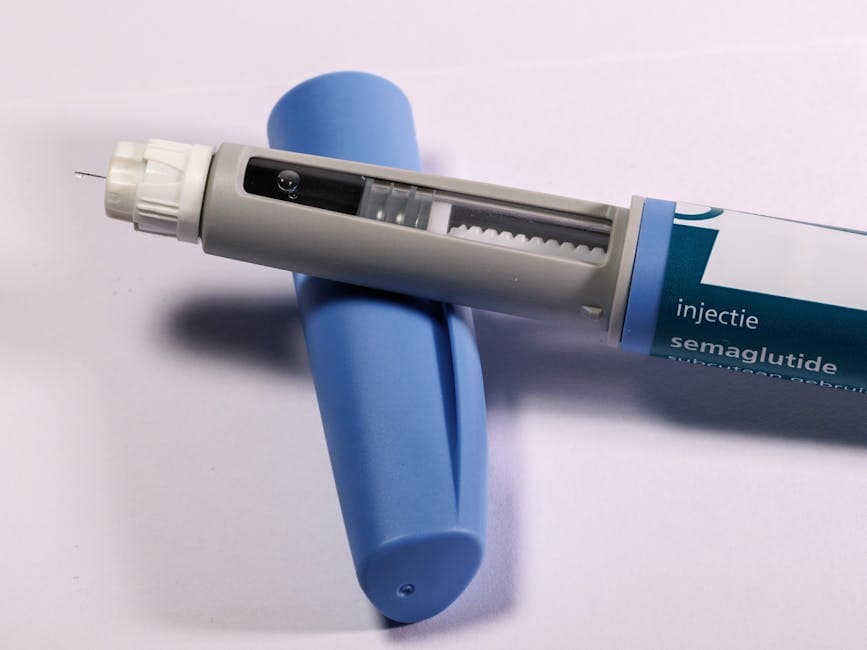
Medically reviewed by a licensed healthcare professional. Last updated May 2026.
Key Takeaways
- There is no official Wegovy to Zepbound dose conversion. Eli Lilly and Novo Nordisk have not published one, and the FDA has not endorsed one.
- Wegovy is semaglutide, a single GLP-1 receptor agonist. Zepbound is tirzepatide, a dual GIP and GLP-1 receptor agonist. Different molecules, different titration schedules, different tolerability profiles.
- In SURMOUNT-5, the first head-to-head trial, tirzepatide produced 20.2% mean weight loss at 72 weeks versus 13.7% with semaglutide. Use that as a drug comparison, not a dose conversion.
- A conservative common approach when switching is to restart at the Zepbound 2.5mg starter dose and titrate up over several months, regardless of where the patient was on Wegovy.
- The "Wegovy 2.4mg equals Zepbound 10mg" charts circulating online are not official, not FDA-supported, and can mislead patients who use them to self-adjust dosing.
- Switching usually requires a fresh prior authorization. Your insurance generally treats this as a new medication start, not a continuation.
I keep getting a version of this question from people on Wegovy who want to switch to Zepbound. "I'm on 2.4mg of Wegovy, what dose of Zepbound do I start at, 10mg or 15mg?" The premise of the question is the problem. There is no official dose conversion between the two drugs, and if you treat your Wegovy 2.4mg as if it equals a specific Zepbound dose, you can wind up worse off than if you had stayed where you were. This piece is what I wish more people knew before the switch.
Here is the short version. Wegovy is semaglutide. Zepbound is tirzepatide. They share a drug class but they are different molecules with different mechanisms, different titration schedules, and different tolerability. The FDA approved each with its own starting and maintenance dose schedule. Neither Eli Lilly nor Novo Nordisk has published a cross-product conversion, and the conservative approach many prescribers take is to restart you at the Zepbound starter dose, regardless of where you were on Wegovy, and titrate up from there. That is not because doctors are being paternalistic. It is because the drugs are different enough that "equivalent" is a slippery word.
The two drugs do different things
If you skim the first three paragraphs of any patient-facing Wegovy or Zepbound page, you get the impression these drugs are interchangeable cousins. They are not.
A scope note first. This piece focuses on the standard Wegovy weekly injection at the 2.4 mg maintenance dose. The FDA approved Wegovy HD 7.2 mg on March 19, 2026, and it was introduced in the U.S. in April 2026; it has a separate label and titration schedule, so patients taking Wegovy HD should discuss switching specifically with their prescriber[4][6]. The oral Wegovy tablet approved for chronic weight management is also outside this article's scope and is distinct from Rybelsus, which is labeled for type 2 diabetes.
The standard Wegovy injection contains semaglutide, which activates the GLP-1 receptor. That receptor lives on pancreatic beta cells, gut tissue, and parts of the brain that regulate appetite. Activating it slows gastric emptying, suppresses appetite, and reduces caloric intake. The full titration for the standard injection goes 0.25mg, 0.5mg, 1mg, 1.7mg, 2.4mg, with four weeks at each step. Once you reach 2.4mg, that is the maintenance dose for this formulation.
Zepbound (tirzepatide) activates the GLP-1 receptor AND the GIP (glucose-dependent insulinotropic polypeptide) receptor. GIP is a separate gut hormone that modulates insulin release and fat metabolism. Adding GIP activity to GLP-1 activity changes the pharmacology in a way that is not just "more of the same." The full Zepbound titration goes 2.5mg, 5mg, 7.5mg, 10mg, 12.5mg, 15mg, again four weeks at each step. Maintenance can land at 5mg, 10mg, or 15mg depending on tolerance and response.
You cannot map 2.4mg of semaglutide onto a single Zepbound dose because the two doses are not measuring the same thing. They are measuring different molecules acting on different receptor sets with different potency curves.
What SURMOUNT-5 actually shows
The closest thing to a real comparison between these two drugs is SURMOUNT-5, the first head-to-head trial. It was published in the New England Journal of Medicine in 2025.
SURMOUNT-5 was an open-label, randomized phase 3b trial that enrolled 751 adults with obesity but without type 2 diabetes. Participants were randomized 1:1 to subcutaneous tirzepatide or semaglutide once weekly, both titrated to maximum tolerated doses over their respective standard schedules, plus a behavioral-support program. The trial ran 72 weeks.
| Outcome at 72 weeks | Tirzepatide (Zepbound) | Semaglutide (Wegovy) |
|---|---|---|
| Mean change in body weight | -20.2% | -13.7% |
| Achieved ≥30% body weight loss | 19.7% | 6.9% |
| GI-related discontinuation | 2.7% | 5.6% |
| Participants | 374 | 376 |
Tirzepatide produced larger mean weight loss, a higher proportion of high responders, and lower GI discontinuation. Both arms were titrated to their own maximum tolerated dose, not to matched milligrams. SURMOUNT-5 does not say "Wegovy 2.4mg converts to Zepbound 7.5mg." It says the two molecules produce different outcomes at their respective maximum doses. Treat it as a drug comparison, not a dose conversion.
How the switch usually happens in practice
When patients move from Wegovy to Zepbound, a conservative pattern that comes up across clinical write-ups is to restart at the Zepbound 2.5mg starter dose. The typical sequence:
Your last Wegovy injection acts as your washout. Semaglutide has a roughly week-long half-life, so the practical guidance many prescribers use is to wait about seven days from your last Wegovy dose before taking your first Zepbound dose. Then you begin Zepbound at 2.5mg weekly. After four weeks at 2.5mg, you move to 5mg. Each subsequent dose increase happens at four-week intervals, with your prescriber deciding whether to push to the next dose based on tolerance and progress.
You might be wondering whether you have to redo the side-effect titration if you tolerated Wegovy at 2.4mg well. The honest answer many clinicians give is yes, most of the time. Tirzepatide can produce different GI symptoms than semaglutide, and your body is reacting to a new molecule. The titration schedule exists for tolerability, not for arbitrary caution.
A few practical points your prescriber should mention:
- Time between your last Wegovy injection and your first Zepbound injection
- Your starting Zepbound dose
- Expected titration timeline to reach maintenance
- What to do if side effects hit harder than expected
If your prescriber proposes starting you at Zepbound 7.5mg or higher because you "were on Wegovy 2.4mg," that is worth a conversation. Not necessarily wrong in every case, but it is outside the labeled starting protocol, and you should understand the reasoning.
The "conversion charts" online are not real
Search for "Wegovy to Zepbound conversion chart" and the results pages will give you a tidy-looking grid mapping each Wegovy dose to a Zepbound dose. The most common version maps Wegovy 2.4mg to Zepbound 10mg, with 1.7mg to 7.5mg, 1.0mg to 5mg, and so on.
These charts are not official. They are not from Eli Lilly. They are not from Novo Nordisk. They are not from the FDA. They are not endorsed by any major clinical society. They are publisher-generated content, often on telehealth or pharmacy marketing pages, and they can mislead patients who use them to argue for a specific dose or to self-adjust.
No one publishes an official conversion because the conversion is not a clinically established entity. Two molecules, two receptor profiles, two dose-response curves. The right Zepbound dose for someone switching from Wegovy is the right Zepbound dose for that person at that point in their titration, decided by their prescriber. Not by a chart.
Insurance and cost when you switch
Many insurance plans treat a switch from Wegovy to Zepbound as a new prescription, which means a fresh prior authorization. Some plans automate the renewal if both drugs are on formulary and the same diagnosis applies; others require resubmission of BMI, lifestyle-intervention documentation, and sometimes the failure-on-prior-therapy data.
One real-world wrinkle to flag: CVS Caremark removed Zepbound from its Standard Control, Advanced Control, and Value formularies effective July 2025, so members on those Caremark-administered plans may find that a standard prior authorization is not enough to secure coverage. Some employer-customized formularies still include Zepbound. If your plan uses Caremark, confirm formulary status and ask your prescriber about formulary-exception or employer-override paths before you assume a standard PA will work.
Cost-wise, both drugs land in a similar self-pay range when you go through the manufacturer's direct channel. For specifics, our Zepbound cost guide breaks down current pricing, and the Wegovy cost guide does the same. If you are switching primarily because of cost, run the math on both manufacturer-direct programs first. If you are switching because of plateau or side effects, cost is a secondary factor.
For dose-by-dose Zepbound titration costs and what each step of the schedule actually runs, see the Zepbound dosing guide.
When switching is not the answer
A plateau is not a failure. Most patients on Wegovy hit a slower stretch somewhere between month four and month eight, and the temptation to switch spikes during that window. Before you change drugs, ask whether you have given the current one enough time, whether your dose is actually at maintenance, and whether other factors (sleep, alcohol, life stress, a new medication) might explain the slowdown.
If you have been at Wegovy 2.4mg for less than three months and you are still losing weight, even slowly, switching is probably premature. If you have been at Wegovy 2.4mg for six months and have flatly stalled despite good adherence, a switch may help. It may also not. SURMOUNT-5 tells us the average tirzepatide patient does better than the average semaglutide patient. It does not tell us every patient who switches does better.
For more on plateau diagnosis and what to try before switching, see our guide on why you might not be losing weight on Wegovy.
How to actually talk to your prescriber about switching
Specifics work better than open-ended questions:
- Given my trajectory on Wegovy 2.4mg over the last three months, do you think tirzepatide is likely to help?
- If we switch, what is your protocol for the starting Zepbound dose and the titration schedule?
- How long should I expect the new titration to take to reach a maintenance dose?
- Will I need a fresh prior authorization, and can your office initiate it before I run out of Wegovy?
- If the switch does not produce better results within four months at maintenance dose, what is the plan?
For broader context on common GLP-1 switches and decision-making, our GLP-1 switching guide covers the full set. For the side-by-side comparison on the drugs themselves, Zepbound vs Wegovy goes through efficacy, side effects, and patient experience in more detail.
Frequently asked questions
Is there an official Wegovy to Zepbound dose conversion chart? No. Neither Eli Lilly nor Novo Nordisk has published a cross-product conversion, and the FDA has not endorsed one. The molecules are different and the titration schedules are different. A conservative clinical approach is to restart Zepbound at 2.5mg and titrate up.
Will I lose my weight loss progress if I switch? A brief washout does not automatically mean losing progress, but appetite and weight response can vary during early titration. SURMOUNT-5 showed that tirzepatide produced larger mean weight loss than semaglutide over 72 weeks, so on average the switch goes in a favorable direction, but individual results vary.
How long should I wait between my last Wegovy dose and my first Zepbound dose? A common practice is to wait about a week, which aligns with semaglutide's half-life. Your prescriber will give you a specific date based on your last injection and your clinical picture.
Will I have to redo the side-effect titration on Zepbound? Many prescribers say yes. Tirzepatide is a different molecule and can produce different GI symptoms than semaglutide, so starting at 2.5mg and titrating up gives your body a chance to adjust.
Does insurance usually cover the switch? A switch typically requires a fresh prior authorization, even if both drugs are on your plan's formulary. Some plans automate the renewal; others require resubmission of clinical documentation. Your prescriber's office can usually start the prior authorization before you run out of Wegovy.
Can I take Zepbound at 10mg from the start if I was on Wegovy 2.4mg? The Zepbound prescribing information specifies starting at 2.5mg with four-week titration intervals. Some clinicians may individualize based on prior tolerance, but jumping directly to a maintenance dose is outside the labeled starting protocol. If your prescriber proposes that path, ask for the clinical reasoning.
Sources
- Tirzepatide as Compared with Semaglutide for the Treatment of Obesity (New England Journal of Medicine, 2025; SURMOUNT-5 primary publication)
- Zepbound (tirzepatide) showed superior weight loss over Wegovy (semaglutide) in complete SURMOUNT-5 results (Eli Lilly press release, 2025)
- Zepbound full prescribing information (Eli Lilly, FDA-approved label; titration schedule and maintenance doses)
- Wegovy current prescribing information (DailyMed) (Novo Nordisk, current FDA-approved label via DailyMed; titration schedule and maintenance doses for all approved Wegovy formulations)
- SURMOUNT-5: Greater Loss of Weight, Waist Circumference With Tirzepatide Than Semaglutide (American College of Cardiology Journal Scan, 2025)
- Wegovy HD 7.2 mg approved in the US (Novo Nordisk, March 19, 2026)