
Key Takeaways
- On a GLP-1, a real share of the weight you lose can be muscle. In trials without strength training or enough protein, often a third or more.
- The medication controls appetite. It builds none of the habits that keep your results.
- The fix is to train for body composition, not scale weight: protein, resistance training, recovery, and accountability.
- Fortify Fitness is coach Peter Milhous's program for adults 40+ on a GLP-1, virtual nationwide and in person near Burlington, Vermont.
"Medication starts the process. It does not finish it."
That's Peter Milhous's one-line summary of GLP-1 weight loss. He's a coach who specializes in this area, and a lot of the people he works with are adults over 40 on a GLP-1 like Ozempic, Wegovy, or Zepbound, or weighing whether to start. We asked him about the part of these drugs that rarely makes the pharmacy handout: the weight comes off, but some of what you lose is muscle, and past 40 that's the piece you can least afford to give back.
His fix starts with throwing out the scoreboard you're probably using. "The goal is not simply to lose weight," he told us. "The goal is to improve body composition by reducing body fat while building strength and preserving muscle." A lighter number on the scale can hide a worse body than the one you started with.
What the drug does, and what it leaves to you
GLP-1s work mostly by turning appetite down. Semaglutide is the drug in Ozempic and Wegovy; tirzepatide is the one in Mounjaro and Zepbound. In the STEP-1 trial, people on the full semaglutide dose lost about 14.9 percent of their body weight over 68 weeks, roughly 34 pounds for someone who started at 230. That's the trial figure under tight supervision; real-world numbers tend to run lower, since plenty of people stop early or never reach the top dose.
The catch is that weight and fat aren't the same thing. Eat far less and your body pulls from lean tissue along with fat, and the body-composition scans in these trials, where people generally weren't lifting or tracking protein, often showed a third or more of the lost weight coming from muscle. Milhous sees the result come through his door. GLP-1s, in his words, "do not teach people how to preserve muscle, improve strength, build healthy habits, or maintain results long-term."
And muscle isn't just about how your arms look. It's the part of your metabolism you can actually change. Past 40, two concerns rise above the rest: losing muscle and strength, and losing functional capacity, the balance, mobility, and stability that let you move through your day without thinking about it. Milhous frames the goal as long-term health, function, and independence, not simply a lower number on the scale. Lose a chunk of muscle in your 50s and rebuilding it is slow, grinding work.
The medication quiets your appetite. Everything after that is on you, which is the good news, because it means the muscle loss is mostly preventable.
The mistakes he sees most
Ask him where people go wrong and the same short list comes up. Not eating enough protein. Doing cardio and skipping strength work. Losing muscle right along with the fat. Following no real plan. Shorting themselves on recovery and sleep. Watching the scale instead of their body composition. None of these are exotic, and that's sort of the point. The things that wreck results on a GLP-1 are ordinary, and they're fixable without anything fancy.
What protects muscle
Milhous's approach comes down to four things he has clients do, and the research backs each one.
Protein, more than feels natural. When you're eating a lot less, this is the one thing you can't let slide. He treats protein as the first thing on the plate, not the last. A common coaching target is 0.7 to 1 gram per pound of your goal weight, on the higher end of what the research strictly supports but useful while you're losing. One caveat worth taking seriously: if your kidneys aren't in good shape, clear the target with your prescriber first. His broader rule for the food side: "We focus on sustainable nutrition habits rather than restrictive dieting."
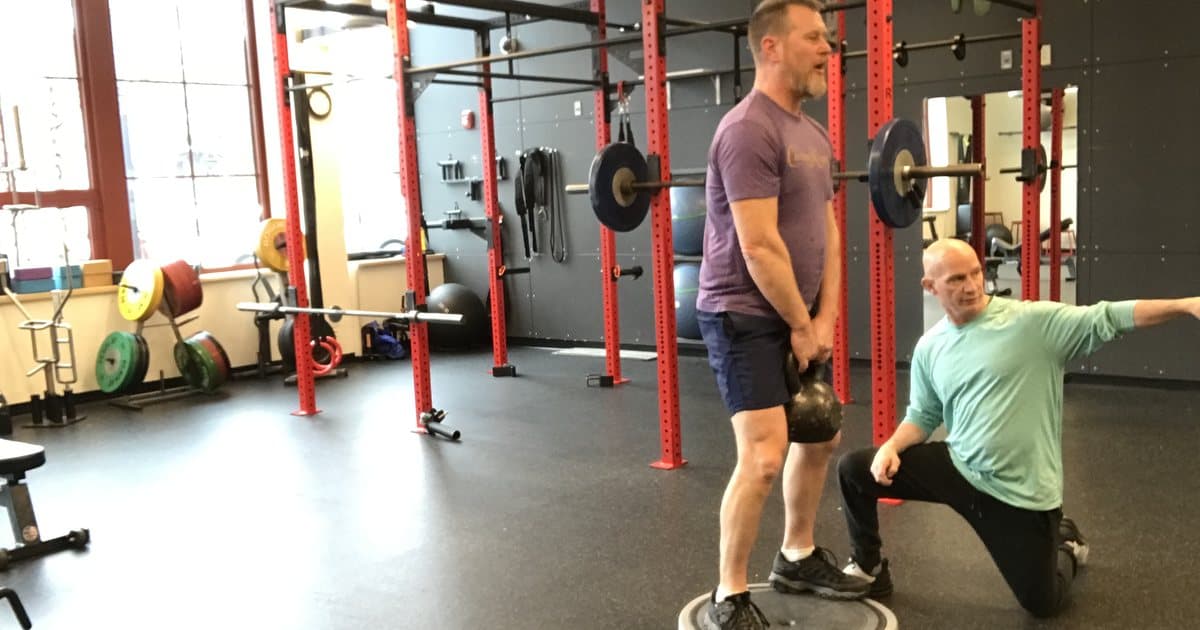
Lift, don't just walk. Cardio is good for your heart and does almost nothing for muscle. Milhous leans on progressive resistance training, the slow climb in weight over time, because the load is the signal that tells your body to keep the muscle while the fat goes. Two to four sessions a week is plenty for most people. If you change one thing on this list, change this.
Recovery and sleep, treated as real training. Muscle is rebuilt while you rest, not while you lift. He names recovery and sleep as their own pillar, not an afterthought. Train hard, skip the recovery, and you can still go backward.
Track body composition, not the scale. The scale can't separate muscle from fat. Body fat percentage, strength numbers creeping up week to week, and markers like A1C and fasting glucose tell you more. Those are what he watches, alongside how consistent someone actually is.
If you want the deeper science on the eating side, our companion piece on the newer protein research for people on GLP-1s goes further than I can here.
What working with him looks like
Every client starts with an assessment before any program is written. Milhous looks at strength, mobility, balance, movement quality, recovery capacity, and the lifestyle factors around all of it, then builds the plan around what he finds, delivered through the Fortify Fitness app with coaching calls and check-ins, rather than handing everyone the same template. The assessment also catches the limitations, an old injury or a mobility gap, that would otherwise slow progress or raise the risk of getting hurt.

From there the program moves through four phases, and the order is deliberate: rebuild function first, then chase performance. Rebuild covers movement quality, balance, and consistency. Foundation adds structured lifting and nutrition habits. Build pushes strength and body composition. Perform is about holding the results for the long run. You move up as you're ready, not on a fixed timeline; as he puts it, clients advance "based on readiness, consistency, recovery, movement competency, and goals."
Two things stood out as good signs, in a category full of people selling things they shouldn't. First, he stays out of medical decisions: "All medication decisions remain between the client and their prescribing physician," he says, and Fortify Fitness doesn't prescribe or hand out medical advice. Second, he's blunt about who the program isn't for: "Fortify Fitness may not be the right fit for individuals seeking rapid weight loss without exercise."
He's also been through it himself. By his account he dropped 16 pounds and 6 percent body fat on a GLP-1 while holding his strength, and he points to a client who lost more than 25 pounds on the same approach while getting stronger. The way he measures progress is the tell: strength, body composition, energy, recovery, and performance, not scale weight on its own. His bio lists a B.S. in applied health science, more than 30 years of coaching, NASM personal training, a MedFit obesity specialty, the NESTA GLP-1 fitness specialist credential, and national board certification as a health and wellness coach.
The line he keeps coming back to
"If you're using a GLP-1 after 40, don't focus solely on losing weight. Focus on preserving muscle, improving strength, and building habits that support your health long after the medication has done its job."
That's the case for treating the medication as step one instead of the whole plan. If you want to see whether his program fits, Fortify Fitness runs a free 30-minute discovery call.
What a workable week looks like
None of this has to be perfect. It has to be something you'll still do on a bad Thursday. Three short lifting sessions, a protein number you hit most days, a bedtime you mostly keep, and a body-fat check every couple of weeks instead of a daily weigh-in. The workouts are only part of it: staying consistent with movement quality, recovery, and the daily habits between sessions matters as much as the training itself. Hold that for the year or so you're likely on the medication and the weight that comes off mostly stays off, and you keep the strength you walked in with.
If you haven't settled on a provider yet, that part comes first. Our 90-second quiz can match you with one. Get the medication right, then go protect what's underneath.
Sources: Impact of Semaglutide on Body Composition in Adults With Overweight or Obesity: Exploratory Analysis of the STEP 1 Study, Journal of the Endocrine Society (2021); Fortify Fitness GLP-1 program.