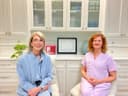
★ 5.0(69 on Google)
Listed
Part of the Raleigh-Cary-Durham metro area
For keyboard navigation, use the clinic list adjacent to this map.
4.8
Avg Rating
across 9 of 9 listed
100%
4+ Stars
of the 9 rated
Ratings are based on 2,158 public Google reviews across these 9 listings.
We don't have verified information about which insurance plans these clinics accept. Contact clinics directly to ask whether they bill your plan, and verify GLP-1 coverage with your insurer.
Chapel Hill's biggest healthcare advantage is also its defining feature: the University of North Carolina. UNC Health operates a comprehensive weight management program with obesity medicine specialists, endocrinologists, and bariatric surgeons, all within the system. The UNC Medical Weight Program at Eastowne offers multidisciplinary evaluations that combine GLP-1 medications, lifestyle counseling, and even Optifast programs for patients who need more aggressive intervention. For a town this size, having an academic medical center with that level of specialization is unusual and worth factoring into any clinic comparison.
Franklin Street is the spine of Chapel Hill, and it bleeds into Carrboro without much warning. The food culture here is layered in a way that makes nutritional counseling complicated. Mama Dip's has been serving Southern breakfast on West Rosemary Street since 1976, and Carolina Coffee Shop claims the title of North Carolina's oldest continuously operating restaurant. But the scene has evolved far beyond comfort food. Weaver Street Market in Carrboro is the largest food co-op in the Southeast, and the lawn out front is basically the town's living room on Saturday mornings. A GLP-1 provider who only thinks about Southern food when building your plan is about ten years behind what this community actually eats.
The Northside and Pine Knolls neighborhoods are historically Black communities with deep roots in Chapel Hill's story, and they sit just blocks from campus. Chapel Hill's demographics run about 63% white and 13% Asian, with an 11% Black population and a growing Latino community. The 18% poverty rate, driven partly by student households, means affordability matters for a significant slice of the population. Compounded semaglutide in the Chapel Hill area runs $225 to $500 monthly, while brand-name programs through UNC Health or private practices can exceed $800. Here's what locals know that visitors don't: the Midtown area around Eastgate, where Root Cellar Cafe and Flyleaf Books sit, has become its own quiet center of gravity separate from the Franklin Street scene, and several medical offices have clustered there precisely because the parking is easier.
Orange County's outdoor infrastructure supports an active population. The Bolin Creek Greenway, Carolina North Forest trails, and the general walkability of downtown and Carrboro give GLP-1 patients real options for building movement into daily life. Providers connected to UNC Health can coordinate across specialties in ways standalone clinics can't match, but independent Triangle practices often compensate with more personalized attention and lower costs.
Monthly GLP-1 programs in Chapel Hill typically run $225 to $500 for compounded semaglutide and $500 to $900 or more for brand-name Wegovy or Zepbound through UNC Health or private practices. Academic medical center pricing can be higher, but it often includes more comprehensive monitoring and specialist access.
Yes. UNC Health offers a multidisciplinary weight management program that includes GLP-1 medications, lifestyle counseling, and coordination with endocrinology and bariatric surgery when needed. You can reach the UNC Diabetes and Endocrinology Clinic at Eastowne at 984-974-2950.
Many commercial plans in North Carolina cover GLP-1 medications with prior authorization for patients with a BMI of 30 or higher, or 27 with comorbidities. Coverage through UNC Health's system may depend on your specific plan and whether your provider is in-network. The State Health Plan for employees has specific criteria worth checking.
We email when local providers open, change pricing, or start accepting new patients.
This site is for educational purposes only and is not medical advice. Always consult a healthcare provider before starting any medication. Full disclaimer
Yes. North Carolina allows telehealth prescribing for GLP-1 medications. UNC Health and several independent Triangle-area providers offer virtual visits. This is particularly useful for residents in surrounding areas like Hillsborough or Pittsboro who want Chapel Hill-level care without the drive.
Chapel Hill's advantage is UNC Health, which provides academic medical center resources including obesity medicine specialists, research-informed protocols, and multidisciplinary coordination. Raleigh and Durham have strong options too, but Chapel Hill concentrates that expertise in a smaller, more walkable community.
Orange County's adult obesity rate is approximately 23%, well below the North Carolina state average of about 35%. Chapel Hill's active, highly educated population tends to have lower obesity rates than the state overall, but the demand for GLP-1 treatment still reflects a community that takes metabolic health seriously.
Browse the 9 clinic listings for Chapel Hill, North Carolina on this page, then ask each clinic directly whether it prescribes semaglutide and which insurance it accepts. We don't have verified information about individual clinics' medications or insurance.
Most medical weight loss clinics in Chapel Hill do not require a referral. You can schedule a consultation directly with an obesity specialist or weight management provider. Some insurance plans may require a referral from your primary care physician for coverage purposes.
GLP-1 Medications
Compare Ozempic, Wegovy, Mounjaro, and more