
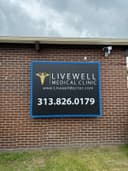
Livewell Medical Clinic
clinic
★ 5.0(16 on Google)
Listed
Part of the Detroit-Warren-Dearborn metro area
For keyboard navigation, use the clinic list adjacent to this map.
4.4
Avg Rating
across 5 of 6 listed
80%
4+ Stars
of the 5 rated
Ratings are based on 74 public Google reviews across these 6 listings.
We don't have verified information about which insurance plans these clinics accept. Contact clinics directly to ask whether they bill your plan, and verify GLP-1 coverage with your insurer.
Detroit's healthcare landscape is defined by a few major systems: Henry Ford Health, Beaumont (now Corewell Health), and the DMC (Detroit Medical Center). These institutions provide the clinical backbone, and several of our top-ranked GLP-1 providers have training or affiliations with them. The University of Michigan health system in Ann Arbor is 45 minutes west and influences treatment standards across Southeast Michigan.
The D's food culture is a point of enormous pride. The Coney dog debate (Lafayette vs. American, and locals know it's Lafayette) is as heated as any food rivalry in the country. Buddy's Pizza invented Detroit-style: thick-crusted, rectangular, Wisconsin brick cheese caramelized on the edges, sauce ladled on top. Mexicantown in Southwest Detroit serves some of the most authentic Mexican food in the Midwest. Greektown's saganaki ("OPA!") and the Asian Corned Beef egg roll are uniquely Detroit. This city eats with conviction, and the best GLP-1 providers respect that.
Health disparities in Detroit are severe and tied to decades of structural factors. Many neighborhoods are food deserts. The city's Black community (76% of the population) faces obesity rates approaching 48%. The Arab-American community in Dearborn (300,000+ in the metro, the highest concentration in the US) has its own health patterns influenced by cultural food traditions and hospitality norms. Providers who understand these community-specific dynamics will deliver better care than those running a one-size-fits-all program.
Detroit's revitalization is real but uneven. Corktown, Midtown, and downtown have seen significant investment, while many neighborhoods outside the 7.2 square miles of the downtown core still face serious resource gaps. Telehealth can help bridge this divide for patients in underserved areas.
Metro Detroit GLP-1 programs range from $200 to $550 a month. The city's cost of living keeps pricing more accessible than coastal markets. Several providers offer sliding-scale options.
Detroit's obesity rates are among the highest in the Midwest. The Black community faces rates approaching 48%, and the Arab-American community in Dearborn also has elevated rates. Food deserts in many neighborhoods compound the challenge.
Yes. Troy, Southfield, Dearborn, Royal Oak, Ann Arbor, and Novi all have providers. Many Detroit-based clinics also serve suburban patients through telehealth.
We email when local providers open, change pricing, or start accepting new patients.
This site is for educational purposes only and is not medical advice. Always consult a healthcare provider before starting any medication. Full disclaimer
Many commercial plans in Michigan now cover GLP-1 medications for qualifying patients. Michigan Medicaid (Healthy Michigan Plan) coverage for obesity medications is more limited. Check your specific plan.
Yes. Michigan allows telehealth prescribing. This is especially important in Detroit, where some neighborhoods with the highest health needs have the fewest in-person provider options.
ABOM certification, transparent pricing, and cultural competence. The best Detroit providers understand the city's diverse communities and don't apply a generic treatment approach to a patient base that includes Black, Arab-American, and Latino populations with different health patterns and food cultures.
Browse the 6 clinic listings for Detroit, Michigan on this page, then ask each clinic directly whether it prescribes semaglutide and which insurance it accepts. We don't have verified information about individual clinics' medications or insurance.
Most medical weight loss clinics in Detroit do not require a referral. You can schedule a consultation directly with an obesity specialist or weight management provider. Some insurance plans may require a referral from your primary care physician for coverage purposes.
GLP-1 Medications
Compare Ozempic, Wegovy, Mounjaro, and more