
Medically reviewed by a licensed healthcare professional. Last updated March 2026.
How Ozempic Dosing Works
Ozempic (semaglutide) is a once-weekly injectable prescription medication approved by the FDA for type 2 diabetes[1]. It is frequently prescribed off-label for weight management due to its significant appetite-suppressing effects. The medication uses a gradual dose escalation to help your body adjust and minimize gastrointestinal side effects like nausea.
- Ozempic escalates from 0.25 mg to a maximum of 2.0 mg over roughly 12 weeks, with each step lasting at least four weeks.
- The 0.25 mg starting dose is not therapeutic for weight loss, but patients typically lose 1 to 3 pounds during those first four weeks.
- If you miss a dose by more than 5 days, skip it entirely and resume your regular schedule rather than doubling up.
- After its first use, an Ozempic pen can be stored at room temperature between 59 and 86 degrees F for up to 56 days.
Your prescriber will start you at the lowest dose and increase every four weeks based on your tolerability and response[1]. Skipping steps or escalating too quickly is the single biggest cause of severe nausea on semaglutide.
Full Dose Escalation Table
| Phase | Dose | Duration | Purpose |
|---|---|---|---|
| Step 1 | 0.25 mg weekly | Weeks 1 to 4 | Initiation dose. Lets your GI system adjust. Not therapeutic for weight loss. |
| Step 2 | 0.5 mg weekly | Weeks 5 to 8 | First therapeutic dose. Appetite suppression becomes noticeable. |
| Step 3 | 1.0 mg weekly | Weeks 9 to 12 | Standard maintenance dose for most patients. Many stay here long-term. |
| Step 4 | 2.0 mg weekly | Week 13+ | Maximum dose. Used if 1.0 mg does not produce adequate glycemic control or weight loss. |
Each step lasts a minimum of four weeks[1]. Your provider may keep you at a given dose longer if you are experiencing strong side effects or if the current dose is producing good results. There is no medical reason to rush through escalation.
What Each Ozempic Pen Contains
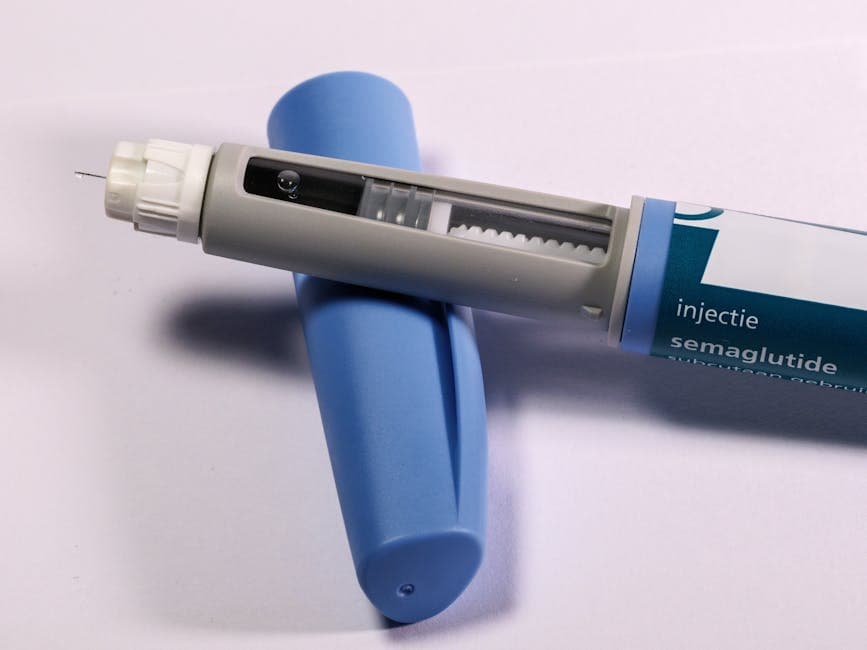
Ozempic comes in prefilled multi-dose pens. Understanding which pen you need helps you manage refills and costs.
| Pen Label | Dose Per Injection | Injections Per Pen | Total mg in Pen |
|---|---|---|---|
| 0.25 mg or 0.5 mg pen | 0.25 mg or 0.5 mg | 4 or 2 | 2 mg |
| 1 mg pen | 1 mg | 4 | 4 mg |
| 2 mg pen | 2 mg | 4 | 8 mg |
The pen contents above are as specified in the FDA-approved prescribing information[1]. The 0.25 mg/0.5 mg pen is a dual-dose pen. You will use it at the 0.25 mg setting for your first four weeks, then switch to the 0.5 mg setting for the next four weeks. One pen covers approximately one month if you are transitioning between these two doses.
Injection Timing and Schedule
Pick one day of the week and inject on that same day every week. It does not matter which day you choose, but consistency matters. You can inject at any time of day, with or without food.
Semaglutide's half-life of approximately one week is the pharmacokinetic basis for its once-weekly dosing interval[2].
Tips for choosing your injection day:
- Many people choose a day when they are home and relaxed, like Saturday or Sunday morning
- Avoid choosing a day that frequently conflicts with travel or irregular schedules
- Some patients prefer injecting in the evening so they sleep through any initial nausea
If you want to change your injection day, you can do so as long as your last dose was at least two days (48 hours) prior. For example, if you normally inject on Mondays but want to switch to Fridays, just inject on the next Friday after your Monday dose. Then continue every Friday going forward.
Missed Dose Protocol
Missing a dose is not uncommon. Here is what to do:
If you remember within 5 days of the missed dose: Take it as soon as you remember. Then return to your regular schedule[1]. For example, if you inject every Monday and forget until Wednesday, take it Wednesday and still inject the following Monday.
If more than 5 days have passed: Skip the missed dose entirely. Take your next dose on your regular scheduled day. Do not double up or take two doses to compensate[1].
If you miss two or more consecutive doses: Contact your prescriber. They may advise restarting at a lower dose to avoid severe GI side effects, especially if you were at 1.0 mg or 2.0 mg.
What to Expect at Each Dose Level
0.25 mg (Weeks 1 to 4)
This dose exists purely to acclimate your body. Weight loss at this level is minimal, typically 1 to 3 pounds over the month, mostly from reduced food intake as your appetite begins to shift. About 20% of patients experience mild nausea during the first week, which usually resolves within a few days.
You may notice that meals feel more satisfying and that you think about food less often. Some patients describe a quieting of "food noise," that constant mental background hum about what to eat next.
0.5 mg (Weeks 5 to 8)
This is where the medication starts working therapeutically. Appetite suppression becomes more pronounced, and most patients lose an additional 3 to 5 pounds during this period. Nausea may return briefly after the dose increase but typically settles within a week.
If side effects are manageable, most providers will continue escalation after four weeks at this dose.
1.0 mg (Weeks 9 to 12)
The 1.0 mg dose is the standard maintenance level for many patients. Clinical trial data shows meaningful A1C reduction and consistent weight loss at this dose[3]. You can expect steady progress of approximately 1 to 2 pounds per week if your diet and activity level are supporting the medication.
Many prescribers will assess your progress at this dose and decide whether escalation to 2.0 mg is warranted. If you are tolerating 1.0 mg well and seeing results, staying here long-term is a reasonable approach.
2.0 mg (Week 13+)
The 2.0 mg dose received FDA approval in March 2022 as the maximum dose for adults with type 2 diabetes who need additional glycemic control[4]. Not every patient needs this dose. Your provider will typically move you to 2.0 mg if your A1C has not reached target or if weight loss has stalled at 1.0 mg.
The jump from 1.0 mg to 2.0 mg is the largest single increase in the escalation, so GI side effects may be more noticeable. Eating smaller meals, staying hydrated, and avoiding greasy or heavy foods during the transition can help.
Common Mistakes to Avoid
- Escalating too fast. Some patients ask to skip to higher doses quickly. This almost always backfires with severe nausea and vomiting.
- Storing the pen incorrectly. Ozempic must be refrigerated before first use. After first use, it can be kept at room temperature (59 to 86 degrees F) for up to 56 days.
- Injecting into the same spot. Rotate injection sites to prevent lipodystrophy (hardening or dimpling of the skin).
- Skipping doses and restarting at the same level. If you miss multiple weeks, consult your provider about stepping back down.
- Comparing your results to others. Ozempic is FDA-approved for diabetes, not weight loss. If weight management is your primary goal, discuss Wegovy (semaglutide 2.4 mg) with your provider.
Compounded GLP-1 medications are not FDA-approved. While legal during FDA-recognized drug shortages, they do not undergo the same rigorous testing as brand-name drugs. Always verify your provider uses a licensed 503A or 503B compounding pharmacy.
Ozempic vs. Wegovy Dosing
Both medications contain semaglutide, but their dosing schedules differ:
| Feature | Ozempic | Wegovy |
|---|---|---|
| FDA indication | Type 2 diabetes | Chronic weight management |
| Maximum dose | 2.0 mg | 2.4 mg |
| Escalation steps | 4 steps | 5 steps |
| Time to max dose | ~12 weeks | ~16 to 20 weeks |
| Escalation intervals | 4 weeks | 4 weeks |
If your primary goal is weight loss and you have a BMI of 30+ (or 27+ with a comorbidity), Wegovy may be the more appropriate prescription. The additional 0.4 mg at the top dose and the dedicated weight management escalation protocol are designed specifically for that purpose.
Ready to start your weight loss journey? Find a GLP-1 clinic near you and connect with a qualified provider today.
Medical Disclaimer: This content is for informational purposes only and does not constitute medical advice, diagnosis, or treatment. Individual results vary. Always consult a qualified healthcare provider before starting, stopping, or changing any medication. If you are experiencing a medical emergency, call 911.
Sources
- Novo Nordisk. (2022). "Ozempic (semaglutide) injection -- Full Prescribing Information." https://www.novo-pi.com/ozempic.pdf
- Christensen, M. et al. (2024). "Clinical Pharmacokinetics of Semaglutide: A Systematic Review." PubMed. https://pubmed.ncbi.nlm.nih.gov/38952487/
- Aroda, V.R. et al. (2017). "Efficacy and safety of once-weekly semaglutide versus exenatide ER in subjects with type 2 diabetes (SUSTAIN 3)." PubMed. https://pubmed.ncbi.nlm.nih.gov/28110911/
- Novo Nordisk. (2022). "Novo Nordisk receives FDA approval of higher-dose Ozempic 2 mg providing increased glycemic control for adults with type 2 diabetes." PR Newswire. https://www.prnewswire.com/news-releases/novo-nordisk-receives-fda-approval-of-higher-dose-ozempic-2-mg-providing-increased-glycemic-control-for-adults-with-type-2-diabetes-301512209.html